

● IMPACT
Daddy, I did it!
How adaptive gaming became one child’s connection to school, friendship, and everyday life after spinal cord injury.
● ASA
The Beginning
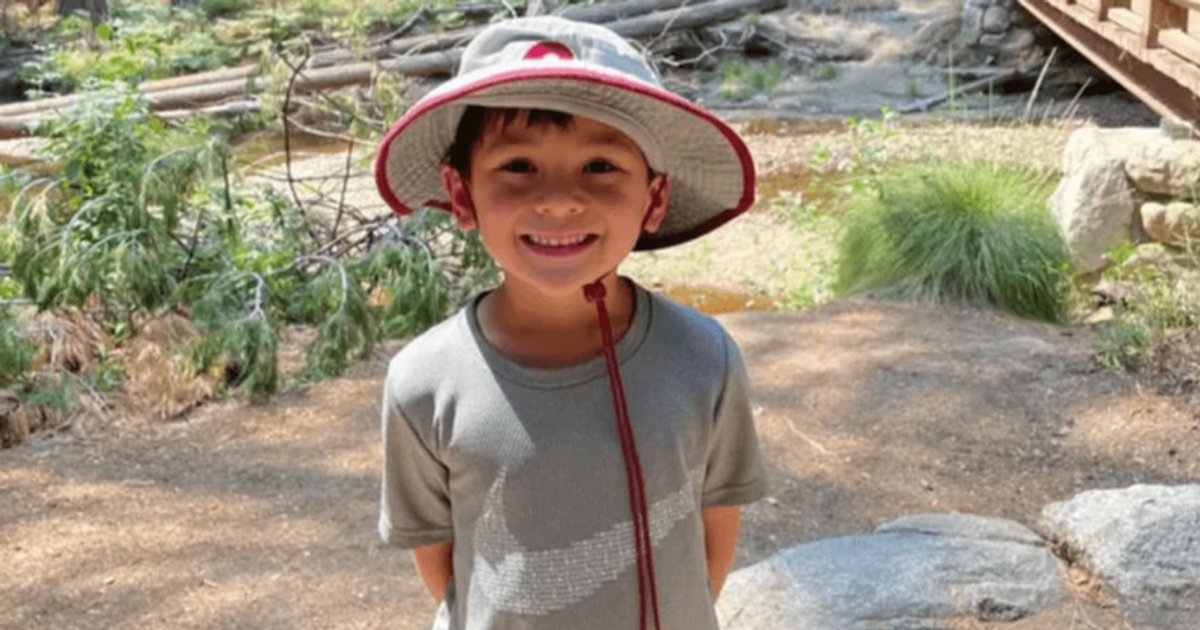
At just 8 years old, Asa survived a tragic shooting on an Oakland freeway that left him paralyzed from the neck down.
His life changed instantly. In a single moment, everything that had been familiar, running, playing, the simple freedom of childhood, became different. But through resilience, the unwavering support of his family, and a community that refused to let him face this alone, Asa's spirit remained intact.
What followed wasn't just a story of survival. It became a story about what's possible when the right tools, the right support, and the right partnerships come together at the right time.
● HOSPITAL
Discovering Adaptive Gaming
During rehabilitation, Asa was introduced to adaptive gaming.
Using a QuadStick, a sip-and-puff controller designed for players with limited mobility, Asa practiced until one day he exclaimed to his father:
“Daddy, I did it!”
“Other than his power wheelchair, the QuadStick is the most important piece of his connection with the world.”
Caesar, Asa’s father
● AFTER HOSPITAL
What Happened After Rehab
Years later, Asa still uses his QuadStick every day, but not just for gaming.
It became his mouth mouse. All of his schoolwork was digitized to make it accessible. Now he uses the same adaptive gaming technology he discovered during rehab to complete assignments, take tests, and chat with friends.
The tool that brought him joy became his primary interface for school and connection.
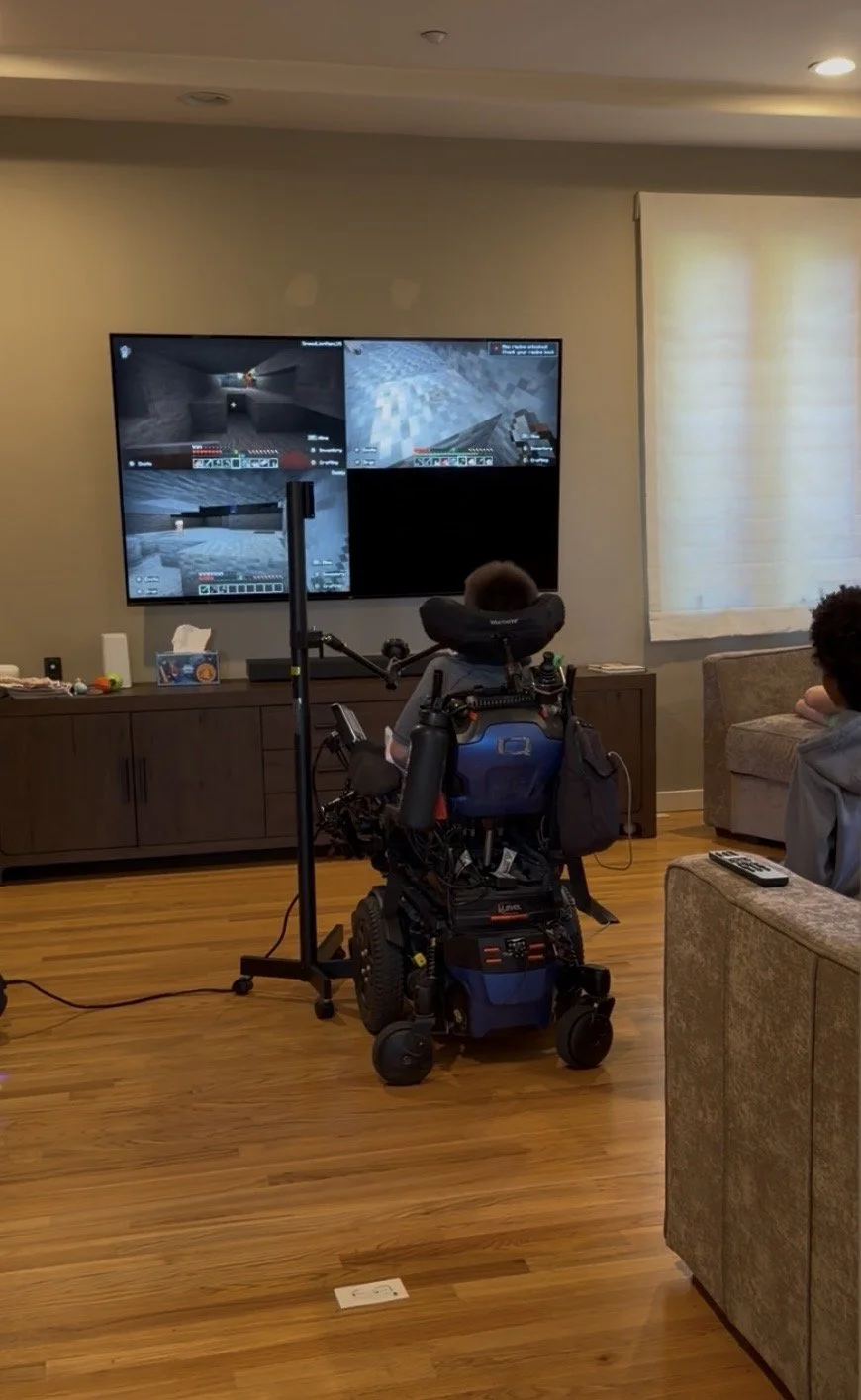
Asa’s home gaming setup
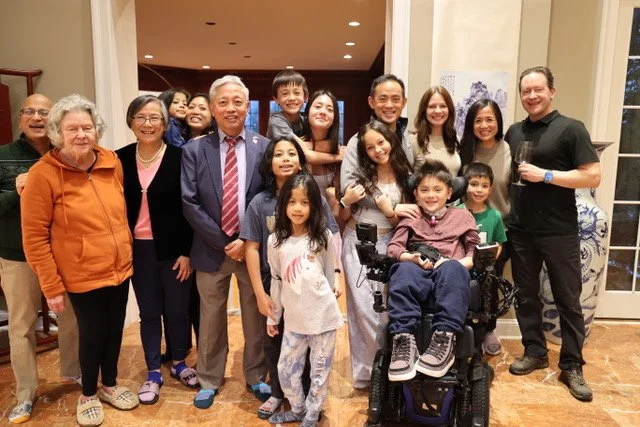
Asa with family
● OUR WORK
Why This Matters.
Inpatient rehabilitation is a unique window. It’s one of the only times patients have coordinated expert-led exposure to adaptive tools in a structured environment.
Once patients go home, that coordination disappears. Families navigate on their own, researching devices, understanding insurance, figuring out what exists. It’s fragmented and overwhelming.
ReSpawn Foundation partners with hospitals during that critical window. We train clinicians to integrate adaptive gaming into therapy, introducing patients to tools that are joyful to use, but have applications far beyond play.
Gaming is fun. It’s motivating. And the skills patients discover can translate directly into communication, education, and participation.
● GET INVOLVED
For Asa, adaptive gaming became a bridge to education, friendship, and independence. And it started with the right introduction, at the right time.
Support Our Work
Fund the equipment, training, and research that gets adaptive gaming to the patients who need it.